
The short version
Use GraphRAG when your data is rich in relationships and your questions must connect several entities or documents. It extracts entities and links into a knowledge graph, which can improve contextual retrieval but adds indexing, latency, token, and operational costs. For simple documents or single-faceted questions, regular or hybrid RAG is usually enough; a router can choose per query.
- GAIA-Graph enriches RAG with a knowledge graph that explicitly represents entities and their relationships.
- It is most useful for interconnected data and complex queries that require traversing several relationships.
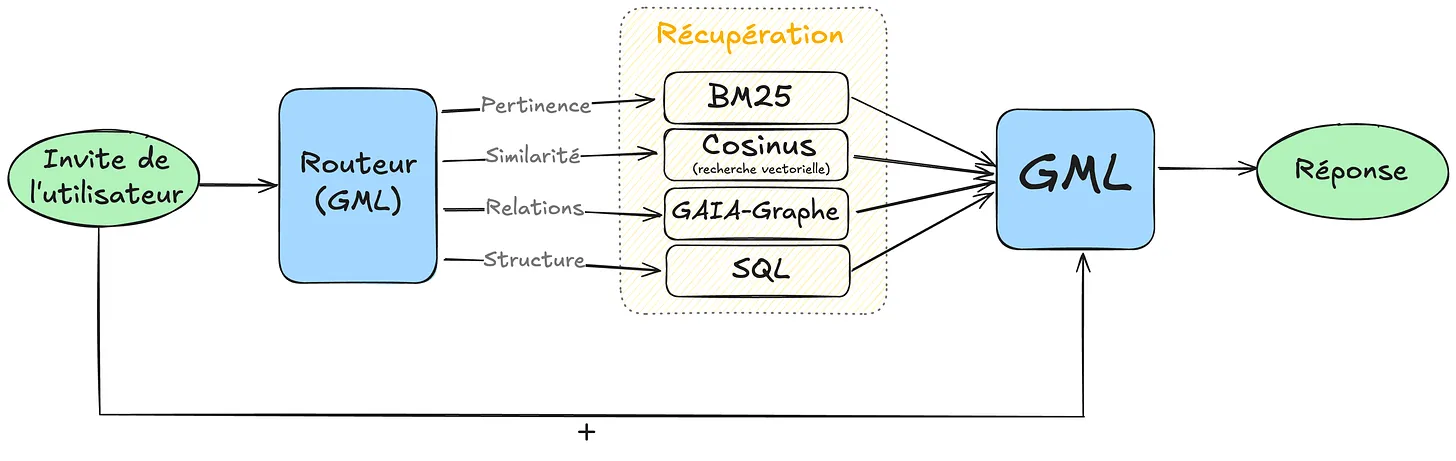
- A router can choose between GraphRAG, traditional RAG, and other methods to balance accuracy, cost, and speed.
This is an older article from our weekly Parlons IA newsletter. Make sure to subscribe to the newsletter here to receive each edition as soon as it comes out!
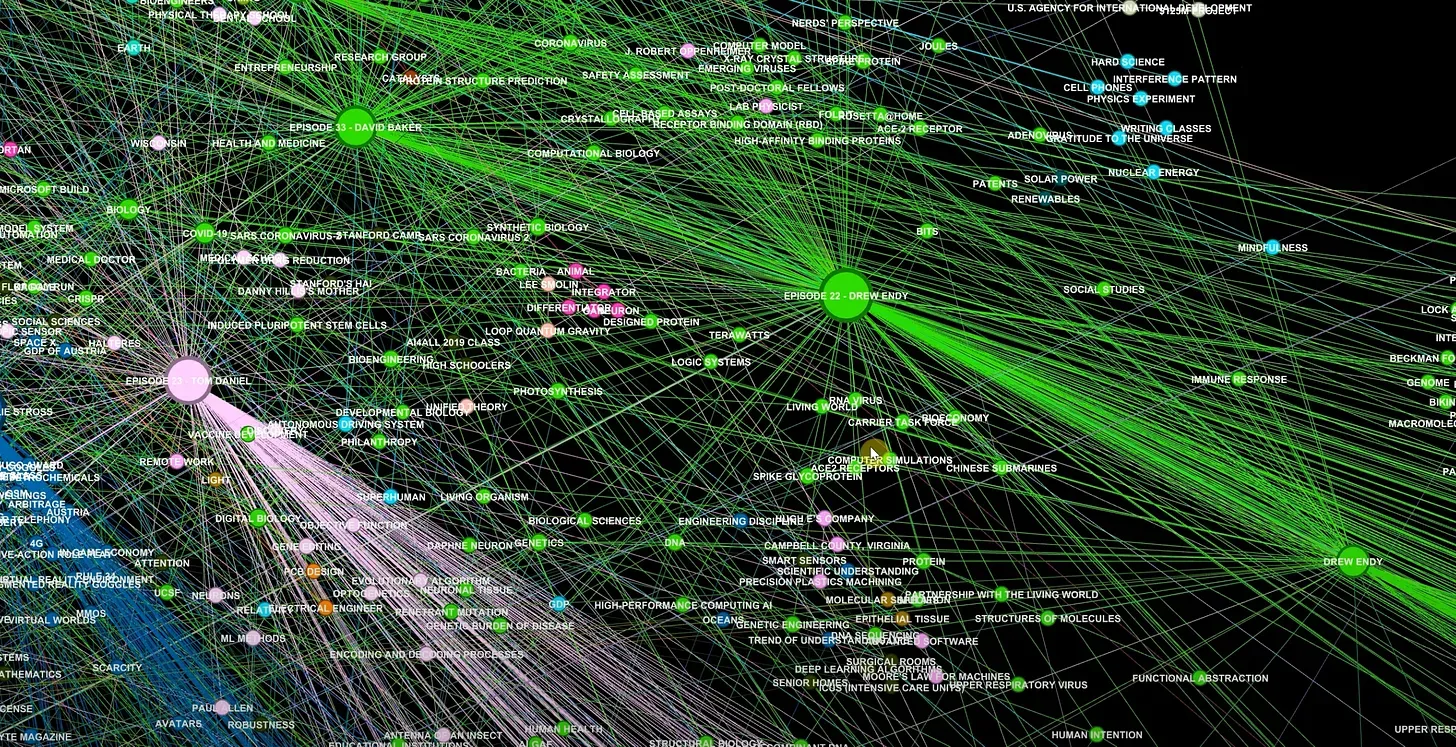
This is what graph-based retrieval-augmented generation (GraphRAG) looks like.
Do you really need a data system this complex?
GAIA-Graph (or GraphRAG) is a powerful extension of the retrieval-augmented generation (RAG) stack that is getting a lot of attention thanks to contributions from Microsoft and LlamaIndex. But the question remains: should you use it?
To answer that question, we first need to understand what it is.
What Is GAIA-Graph?
GAIA-Graph improves traditional RAG by integrating knowledge graphs into the retrieval process. Instead of relying only on vector similarity (comparing numbers to find the most relevant “similar” matches), GAIA-Graph extracts entities and relationships from your data, creating a structured representation (a knowledge graph) that captures semantic connections. (Here, semantic means understanding the meaning of words or data in a specific context, not just their literal definitions.) This approach allows for more nuanced and contextual retrieval, which can lead to more accurate and complete answers from your LLM.
A knowledge graph is simply a structured representation of data that captures entities and their relationships, making the information easier to understand and retrieve.
When to Use GraphRAG: It Is All About the Data
The decision to implement GraphRAG depends heavily on the nature of your dataset. If your data is rich in interconnected entities and relationships, think of research papers (which cite each other and progress over time), enterprise knowledge bases, or complex historical records, GAIA-Graph could outperform regular RAG. It is excellent at capturing and using those connections, enabling more informed and contextually relevant retrievals that standard RAG could miss.
User Queries: Complexity Is Key
GAIA-Graph is most useful for complex, multidimensional queries that require navigating several pieces of information (or asking meta-questions about the data itself, such as “How many articles about RAG were published between 2010 and 2020?” (Spoiler: 0)). If your users frequently ask questions like “How does the theory proposed in paper A relate to the findings in paper B, and what are the implications for field C?”, GAIA-Graph’s ability to navigate and synthesize information across your knowledge graph becomes essential. Regular RAG might simply retrieve the most relevant chunks for some of those topics, and the large language model (LLM) could hallucinate the rest.
Data Storage Considerations
Although GAIA-Graph can work with different data storage systems, it is especially powerful when your data is already structured as a graph or can easily be transformed into one. Graph databases such as Neo4j or Amazon Neptune are natural choices, but even relational databases can be used if you clearly understand the relationships between the entities in your data.
P.S. Ideally, you want a purpose-built dataset with relationship information (for example, who cites whom), but you do not necessarily need one. Fortunately for us, libraries such as Microsoft GraphRAG do this automatically by using the best LLM to identify our entities and relationships.
When to Skip GAIA-Graph
Despite its power, GAIA-Graph is not always the best choice. For simpler datasets (and single-faceted queries) with straightforward relationships, or when you mainly work with structured text documents, traditional RAG or advanced search methods may be more efficient. Advanced methods include hybrid search, which combines vector similarity with keyword search, or techniques that use metadata filtering to narrow the search space.
It is important to note that GAIA-Graph introduces additional complexity and computational overhead in both index creation and query processing, which may not be justified for simple information-retrieval tasks. Here is an example from Microsoft’s paper comparing traditional RAG and GAIA-Graph for the same query:
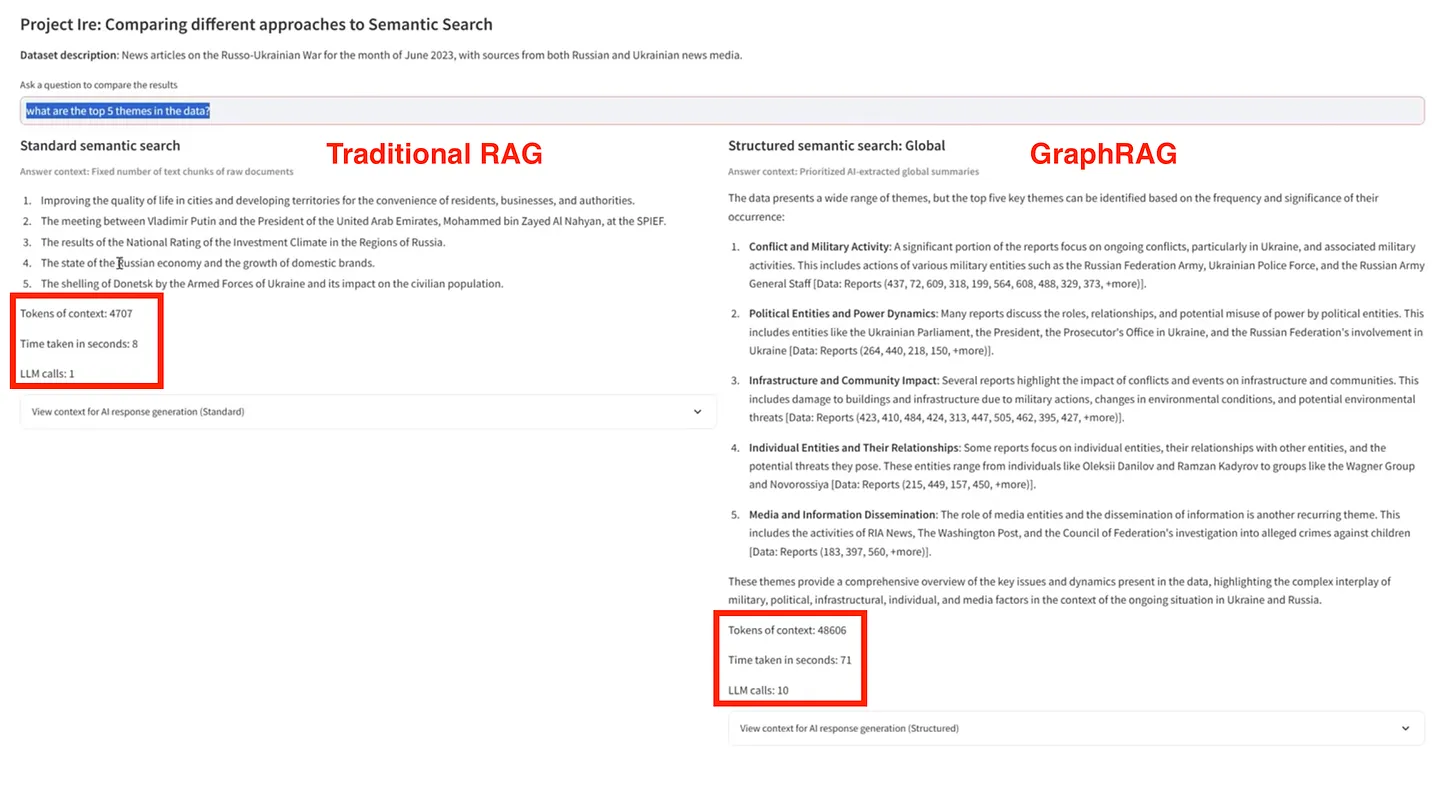
Even though the results are more interesting, GAIA-Graph requires almost 10 times more time and 10 times more tokens to produce. Make sure you need it!
Combining Approaches: The Router Strategy
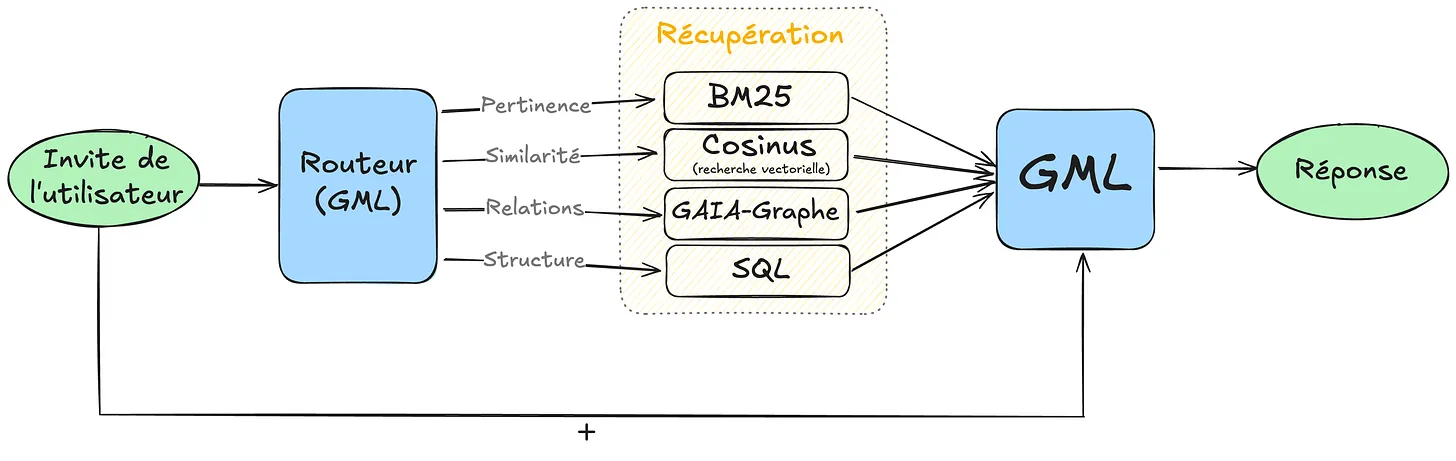
In real-world applications, one approach almost never works for everything. Consider implementing a routing system that can dynamically choose between GAIA-Graph, advanced RAG, text-to-SQL retrieval, or another search method based on the query type and available data. This flexible approach ensures that you use the most appropriate retrieval method for each specific query, optimizing both performance and accuracy. You will need a strong base LLM and a prompt to redirect your queries to the right retrieval system.
Summary: GAIA-Graph, Powerful but Not Universal
GAIA-Graph significantly improves information retrieval for complex, interconnected datasets and queries that require a deep understanding of relationships. However, it also brings greater complexity and resource requirements. Carefully evaluate your specific use case, data structure, and query patterns. For many applications, a combination of retrieval methods, orchestrated by an intelligent router, will offer the best balance between performance and flexibility.
FAQ
What is GAIA-Graph or GraphRAG?
It is an extension of RAG that extracts entities and relationships from data to build a knowledge graph used during retrieval.
When is GraphRAG more useful than traditional RAG?
It becomes valuable when data contains many relationships between entities and queries must connect several pieces of information.
What kind of data works well with GraphRAG?
Interconnected research papers, enterprise knowledge bases, and complex historical records are good examples.
Does GraphRAG require a graph database?
No. Neo4j and Amazon Neptune are natural choices, but a relational database can also work when relationships between entities are clear.
Why does GraphRAG cost more?
Index creation and query processing add computation, time, and tokens compared with a simpler retrieval system.
Can GraphRAG be combined with other search methods?
Yes. An intelligent router can select GraphRAG, advanced RAG, text-to-SQL, or another method based on the query and available data.